
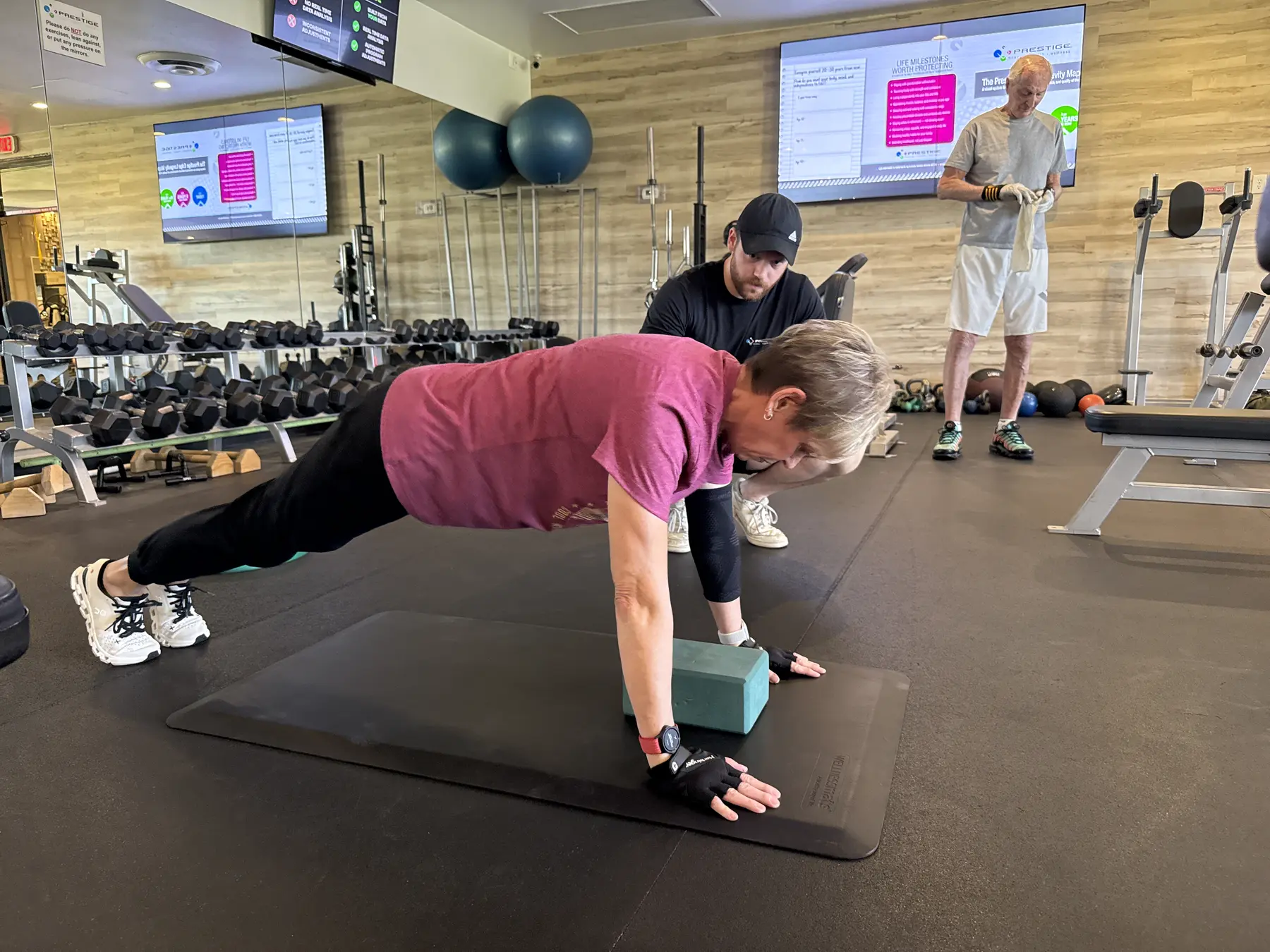
A desk, commute and evening screen time can add up to long stretches in one position. The answer is not to fear sitting or chase one perfect posture. It is to give your body more frequent opportunities to move—and to build the capacity that makes movement easier.
Published August 7, 2023 · Updated August 18, 2026.
The problem is often too little variety
Bodies tolerate many positions. What can become difficult is staying in the same one for a long time, especially when the rest of the day offers little walking, reaching, carrying or strength work. Stiffness after sitting is a signal to change position and move, not proof that your body is damaged.
Daily movement and structured exercise solve different parts of the problem. Short movement breaks add variety during the day. Strength and conditioning improve what your body can do over time. A useful plan includes both.
Make movement breaks easy to repeat
The most effective movement break is the one that actually fits your day. Stand during a call, walk to refill water, take a short lap between meetings or place a commonly used item far enough away that you have to get up. Small cues can turn intention into a repeatable pattern.
You do not need a complicated mobility sequence every hour. Start with a brief change of position. If a longer walk or a few comfortable movements feel good, add them. Consistency matters more than making each break impressive.
- Use calendar transitions as a cue to stand or walk
- Change positions before discomfort becomes the only reminder
- Pair a short walk with a routine task you already do
- Keep movement comfortable and stop if symptoms feel concerning
Strength makes daily movement less expensive
Getting up from a chair, carrying groceries, climbing stairs and reaching overhead all require physical capacity. Personal training can improve strength, balance and confidence with exercises selected for your starting point.
A coach can also help you distinguish between a movement that needs practice, a load that needs to be reduced and a symptom that belongs with a licensed medical professional. Training should expand your options while staying within an appropriate scope.
Track capability, not posture perfection
Useful progress may look like fewer stiff moments, more daily steps, easier stairs, greater training strength or the confidence to take a longer walk. Those outcomes are more meaningful than trying to hold one rigid posture all day.
If you have persistent pain, numbness, weakness or other symptoms that concern you, consult an appropriate medical professional. Educational fitness content cannot diagnose the cause of symptoms.
One useful takeaway
Break up long periods in one position, then build enough strength and conditioning that everyday movement asks less of you.
Primary and public-health sources
Sources and further reading for the ideas discussed above.
- Current Physical Activity Guidelines for AmericansU.S. Department of Health and Human Services
- Adult Activity: An OverviewCenters for Disease Control and Prevention